
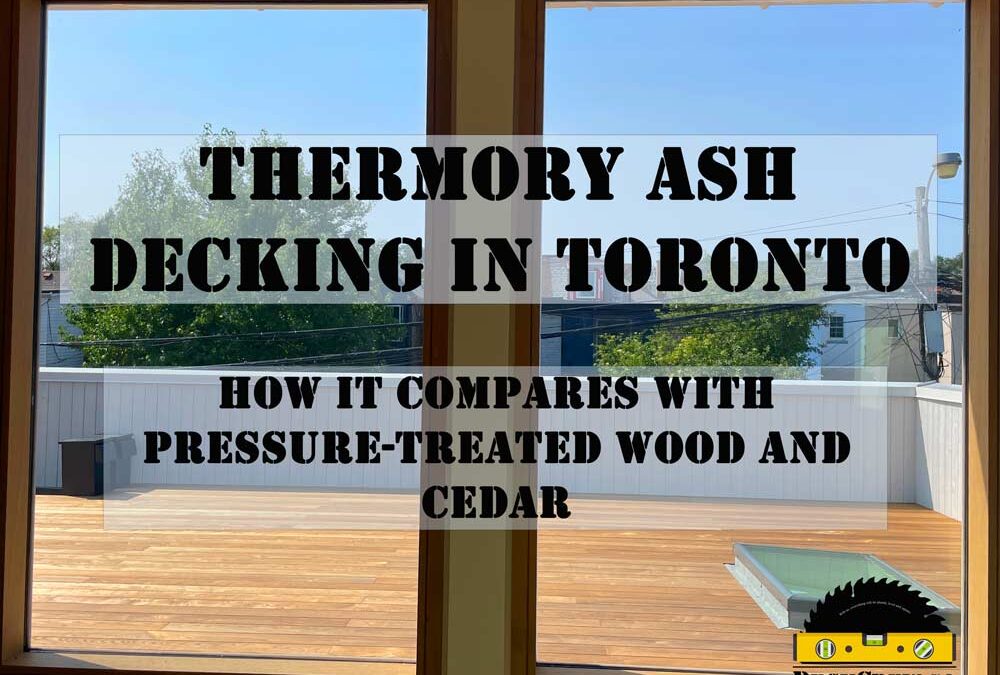
Lay a Thermory Ash board beside a piece of brown pressure-treated pine and look at the grain. The pine often has prominent knots. The ash has long, sweeping grain lines, and its colour runs through the board. Thermory Ash starts out a rich chocolate brown. Leave it exposed to the weather and it gradually turns silver, with the grain still visible across the surface. As a custom deck builder in Toronto, we like to ask homeowners which version they’d rather see from their kitchen window. The answer tells us a lot about whether ash is the right wood for their deck.
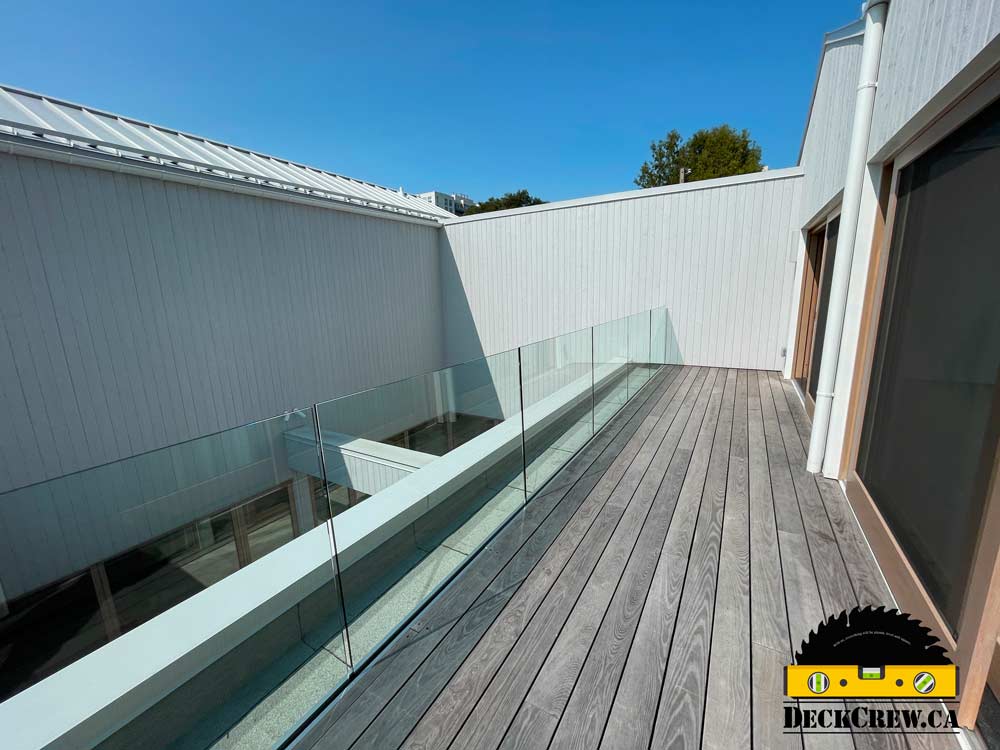
What makes Thermory Ash different?
Thermory uses heat and steam to modify solid white ash all the way through the board. The process gives the wood its deep brown colour, improves its resistance to decay and helps it stay more stable as moisture conditions change. Cut a board to length and you can see the brown colour in the freshly cut end. Look across several boards and you’ll still see the individual grain patterns that make an ash deck interesting.
Homeowners often discover Thermory while researching exotic wood decking. Ash is a temperate hardwood. Pressure-treated decking typically starts with softwood such as pine. A preservative is forced into the wood under pressure to help protect it against decay. Western red cedar is a North American softwood with naturally decay-resistant heartwood. Thermory gives you another route to a durable real-wood surface, especially if you like a dark starting colour and a pronounced grain. You can see the board profile, hidden clips and examples of how the colour changes on Thermory’s Benchmark Ash decking page.
Thermory Ash, pressure-treated wood or western red cedar?
| Decking | What you’ll see | Why you might choose it |
|---|---|---|
| Thermory Ash | Chocolate brown when new, with visible ash grain. Weathers to silver-grey. | You want the character of ash, improved stability and a grooved board that works with hidden clips. |
| Pressure-treated wood | Brown-treated pine has visible knots and grain. Small surface cracks can appear as the boards dry. | A practical choice when you want a real-wood deck and want to keep the upfront cost down. |
| Western red cedar | Reddish-brown heartwood with a generally straight grain. | A good choice if you like warm tones and lightweight boards. Its soft surface can dent under furniture legs. |
When comparing samples, take two or three boards of each material outside. Set them against the brick, siding or stone that will sit beside the finished deck. A single board viewed under showroom lighting tells you relatively little about how a full set of steps will look against red Toronto brick.
Keeping the brown colour or letting the deck go silver
This is the most important ownership decision with Thermory Ash. If the original brown is what sold you, plan to apply a compatible pigmented exterior decking oil and refresh it periodically according to the finish manufacturer’s directions. If you like weathered wood, you can let the ash silver naturally. Either way, sweep off leaves and clear debris between boards, particularly around planters and under furniture where it tends to collect.
Exposure matters. On the same deck, the steps out in the sunshine can lighten sooner than boards tucked beneath a roof. Move a large planter after a season and you may find a darker patch underneath. If you’re planning a partly covered terrace, look at a weathered sample alongside a fresh one. Those two colours may share the space for a while.
Where the layout makes a difference
On a Toronto project on Lansdowne Avenue, our scope included a deck above a garage, a terrace, a balcony and planters. Working with Thermory Ash on that project brought up a practical question that rarely comes across in a sample box. Where should a full-length board run, and where can a shorter piece do the same job?
On a narrow balcony, one run of boards along the long side can draw your eye towards the view. On a wider platform, a divider board can give two shorter runs a deliberate meeting point. We check available lengths before settling on either layout. Sometimes turning the boards or shifting a divider uses the available stock better and eliminates a row of short cuts beside the door.
Built-in features deserve the same attention. The front edge of a bench is somewhere you’ll see and touch the wood every day. A planter can give the boards a natural place to end. For a local example of how those features work together in pressure-treated wood, see our Bloor West Village deck with built-in seating and a planter.
What to ask a Toronto deck builder before you order
Ask how the edges and stairs will look. A hidden clip fits into the side of a grooved Thermory board, leaving the broad walking surface clear of screw heads. At the outside edge or on a stair, that same groove could be visible from the yard. Your builder should be able to show you the edge profile, where plugs or exposed fasteners will go, and how the vertical trim will meet the top board. Our English Walnut deck in Etobicoke shows why that side view matters. The trim follows each turn of the wraparound steps, so you can see how the edges look from the yard.
When comparing quotes, give each contractor the same scope. A price for decking boards alone leaves out clips, plugs, fascia, stair finishing and labour. On a rooftop or balcony, also ask how water will drain and how you’ll reach the drain to clear it. Those details can matter more to the finished job than a small difference in the price per board.
If you’re planning a Thermory Ash deck or comparing pressure-treated wood and cedar for a Toronto property, send us a few photos, rough dimensions and a view from the door you’ll use most. Tell us whether you picture rich brown boards or weathered silver. We can use that starting point to discuss materials, layout and finish and prepare a DeckCrew quote for your project.